2019 Reflection

Reflecting back on the many incredible opportunities I was given in 2019 encourages me to further think about what I look for in an employer and the career path I will choose to go down. Opting to complete an industrial placement in my third year of university has allowed me to explore industries that I may have never considered before. This is something I am extremely grateful for. I have been able to gain valuable experience through the interview process’ for different companies. This experience has enabled me gain a new found realisation for the qualities that I find important in an employer.

I was fortunate enough to reach the final round of interviews with Disney, Mercedes AMG and Northeastern University before accepting my position with Northeastern in Boston. This gave me a huge insight into how the interview process is carried out and what employers are looking for. Each interview process was vastly different as each company is, however, held many similarities such as the type of candidate they are looking for and the qualities they possess.

Through this experience I have been able to not only find out more about these companies and their workplace culture but also about what their values are. This was reassuring and exciting for me as these are companies I would have only dreamt of starting a career in and this has furthered my desire to aim high for these prestigious organisations.

In conclusion, my industrial placement experience from start to finish has has allowed me to gain tremendous experience in many different areas. From the very start process of looking for companies , to interviews including preparation and feedback to finally the role I am currently in. This has been an invaluable experience. I am truly thankful for all of the opportunities an industrial placement has given me and would strongly recommend any student with the chance to undertake one to do so.

Blog 16

Northeastern University is an institution known for their international experiences including exchanges, co-ops and language programs.  “Northeastern suggests that international students make up about 32.8% of the student body” (Factual, 2018) In particular completing my IP in the NUGlobal office, only working with international students, it has allowed me to gain an insight into the struggles international students may face when coming to a new country and institution.

“Research suggests that international students can experience many challenges as a result of language and cultural barriers, academic and financial difficulties, interpersonal problems, racial discrimination, loss of social support, alienation and homesickness” (Yeh and Inose 2003). The university are very aware of these problems and have support networks and safe spaces for international students to go and receive help. In particular, some of the precautions that our department puts in place is at orientation at the beginning of the programme .We have many campus partners come in such as NUPD (Northeastern University Police Department),  TitleIX (prohibits discrimination based on gender, which includes sexual harassment and sexual assault), OIDI (Office of institutional Diversity and Inclusion) and UHCS (University Health and Counselling Services). These campus partners explain and discuss cultural differences with the students through activities and interactive ways to get the students involved. Having these partners come at the start of the semester allows students to gain knowledge of these services and where to go if they ever do need support. Furthermore, it allows the students to get an overall view of the differences between their home country and university to the USA and Northeastern before integrating into their classes.

Through exploring this issue, I have been able to achieve both my personal goal 1 “to acquire cultural competency through working in a different country. By communicating with and effectively interacting with people across different cultures that I will encounter, not only, working in a different country but also working in Northeastern Universities Global office.” And IP objective 7 to “Acquire cultural competence that would enable students to succeed in a cultural environment different from their own and better prepare them for the global borderless market of the future”.

References

Factual, C. (2018). Northeastern University. Retrieved from Collage Factual https://www.collegefactual.com/colleges/northeastern-university/student-life/international/

Yeh, C. J., & Inose, M. (2003). International students reported English fluency, social support satisfaction, and social connectedness as predictors of acculturative stress. Counselling Psychology Quarterly, 16(1), 15–28.

Links to Campus Partners websites

https://www.northeastern.edu/uhcs/ -UHCS

https://nupd.northeastern.edu/ – NUPD

https://www.northeastern.edu/ouec/ – TitleIX

https://provost.northeastern.edu/oidi/ – OIDI

Blog 15

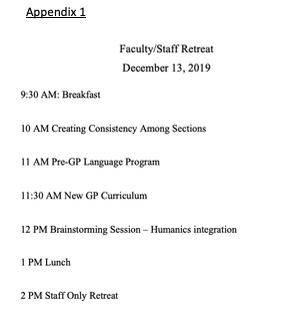
As the holidays approach our team has their annual Christmas staff retreat at the Northeastern downtown campus in the Hilton Hotel. The aim of this retreat is to review and discuss the programs progress from the year. Faculty, Advisors, Director, Assistant director and the operations team all join together for this retreat. Throughout the day many important aspects of our programme were discussed (See appendix 1).

This retreat is very important for the whole programme to come together and ensure that that “People in different departments must collaborate, see the larger picture, and understand that the team must contribute to the whole, in order to avoid unhealthy inter-team conflicts” (Dyer ,2013). Throughout the day topics were brought up so that each staff or faculty member can express their comments and concerns about the programme. This retreat is extremely important as it gives the department as a whole a chance to collaborate as a team on how to make the program better to benefit the students of future academic years.

This experience has allowed me to reach both a personal IP goal “My goal is to develop my interpersonal skills to work as part of a team to contribute towards the larger organizational objective” and also an IP objective “Develop the interpersonal skills necessary for effective work as a member of a team seeking to achieve organisational goals”. By attending the retreat, it allowed me to really see how important it is to come together and review not only what can be improved in the programme but also what we have done well. Giving praise and recognition to the team and particular members when needed was very important. This will ensure that the staff and faculty know that their work is appreciated in making a difference in the larger organisational goals.

References

Dyer, William G., et al. Team Building:Proven Strategies for Improving Team Performance, John Wiley & Sons, Incorporated, 2013. ProQuest Ebook Central, http://ebookcentral.proquest.com/lib/northeastern-ebooks/detail.action?docID=1108693.
Created from northeastern-ebooks on 2020-01-11 14:23:45

Appendix 1

Blog 14

As my placement continues, I am gaining more knowledge and skills about the higher education field, therefore, my responsibilities have increased through informal learning. For example, I have been given the referral exam to organise and proctor every month. The referral exam is an English language test for Northeastern’s college of professional studies applicants. Details can be found in appendix 1. This responsibility includes many tasks throughout the month including registering students, booking rooms on campus, proctoring the exam and sending out the results. 

Research cites the importance of informal learning “Along with education and formal training, informal learning is seen as a key to corporate competitiveness as well as to employment and employability and is thus recognised as a major target area for companies’ human resource policies and also for social partner policy and intervention” (ETUC/UNICE/CEEP, 2002). By having this experience in a competitive workplace, I am able to gain the advantage of experience and informal learning which can aid me in my future career and job search. Each day I am able to observe the workplace and contribute to it, in conjunction with the opportunity to reflect on my experience through these blogs. Through this year I am hoping that informal learning, experience and the gained confidence from this industrial placement will be seen as desirable qualities from future employers.

In gaining this responsibility I have been able to fulfil one of the IP objectives, objective 2 (see appendix 2). Being given this responsibility provided me with confidence in conquering new challenges in the workplace. 

References

ETUC/UNICE/CEEP (2002), Framework of actions for the lifelong development of competencies andqualifications(European Trade Union Congress: Brussels).

Appendix 1

https://cps.northeastern.edu/admissions/international/language-requirements/english-language-exam

Appendix 2

IP Objective2:

Develop the ability to receive, quickly comprehend and execute instructions to the employer’s satisfaction as a means to progressing to a more responsible role;

Blog 13

As the recruitment and selection process continues, I have been kept very involved by my superiors. I have been able to consolidate my knowledge from L1 and L2 of university involving this procedure and apply it into the practical workplace. There were 4 applicants that were interviewed, and notes were taken on all applicants (see appendix 1) from all current employees then shared when making the final decision.

By researching this topic, I have been able to make connections between new hires and current employees especially in a team based working environment. As Heathfield states “Trust your employees’ instincts about the potential cultural fit of a new person, too. They will work most closely with the new employee and their gut reaction to the fit of the potential employee is noteworthy.” (Heathfield, 2019) Especially in our office the setting is an extremely collaborative and open space where opinions and information is shared. Therefore, getting current employees involved is so important to ensure that the new hire will fit into the organization and team culture.

Through being so involved in this process I have been able to achieve the 3rd industrial placement  goal: “Develop the interpersonal skills necessary for effective work as a member of a team seeking to achieve organizational goals,” by working with my team I have been able to input my ideas and opinions about the new hire to help meet the larger organizational goal of hiring a new assistant director of operations for NU Global. Furthermore, I have been able to achieve my 3rd personal placement goal “to acquire knowledge and skills such as networking that can aid me in my future business career through a respected workplace such as Northeastern University.” Through this recruitment and selection process I have been able to meet many new people from all different backgrounds and professions. This can help me in my future, especially the experience of being on the other side of the recruitment and selection process, gaining the knowledge of what employers are looking for.

References

Heathfield, S. (2019, December Sunday 1st). Involve Your Current Employees in the Employee selection Process. Retrieved from The Balance Careers: https://www.thebalancecareers.com/employee-involvement-in-the-employee-selection-process-1919152

Appendix 1

My notes on the interviewees:

Blog 12

In recent weeks the Assistant Director of operations position has opened up in our office and therefore the recruitment and selection process has started. Throughout my studies at GCU I have had many opportunities to become familiar with this process and thus being able to fulfil both IP objective 5: “Relate, in consultation with experienced practitioners, his/her academic studies to the real- life business environment”. And my personal learning contract goal 4: “My goal is to be able to use the academic knowledge such as in my contemporary cultural challenges in international business module in a practical way through the workplace” by putting my knowledge into practice.

When starting the recruitment and selection process it is important to think of both internal and external candidates and who will be the best fit for the position. Through researching this topic, I found a video on tips to follow when applying for an internal promotion (See appendix 1). Furthermore, internal promotion can have many advantages as stated in this article: “The advantage of promotion from within is that your promoted employee is already comfortable with the corporate culture, knows organization policies and will likely get up to speed much faster than a person new to the organization” (Gusdorf, 2008). As Gusdorf states there are many advantages to internal promotion most of which involve convenience and less time plus money in regard to onboarding and training. 

However, although internal promotion has many advantages it also comes with disadvantages such as “promotion from within is that the organization loses out on the chance for new ideas and the creativity that can come from a new person entering the organization for the first time” (Gusdorf, 2008). Furthermore, disadvantages which can involve the lack of new creative and experimental ideas that a new employee can bring which is something that an employer must take into consideration when hiring for particular roles, whether this would be a large concern or not.

Appendix 1

References

Gusdorf, M. L. (2008). Recruitment and Selection: Hiring the right person. Society for human resource management , 2.

Blog 11

This image has an empty alt attribute; its file name is screenshot-2020-01-13-at-14.13.12.png

At the start of my placement at Northeastern University I was approached by one of my colleagues about an upcoming long term project of the university. The initiative is called “Human Library” and through this already exiting initiative we are looking to introduce the event to Northeastern’s annual calendar. Throughout the last few months I have been involved in discussions and meetings with many different campus partners to propose the idea. 

The Human Library concept began in Denmark and has gone on to become a global success operating in more than 80 countries and 6 continents . The organisation creates a “safe framework for personal conversations that can help to challenge prejudice, get aim to help rid discrimination, prevent conflicts and contribute to greater human cohesion across social, religious and ethnic divisions”(Lprentzen, 2000- 2019). Many other universities around the USA have events like this, however, Northeastern is such a huge school and there are so many outside factors to consider that discussions about this event are happening in the present yet the event would not be until next year at the earliest. 

Not only has this opportunity given me the chance to reach placement objective 6  (see appendix 1) but also my personal goal 3(see appendix 2) of acquiring knowledge and skills such as networking that can aid me in my future business career through a respected workplace such as Northeastern University. Through being able to attend these meetings and be involved in such a diverse event which includes so many campus partners it has given me a huge insight not only into the organizational aspect of an event like this but also into the cultural and social issues that an event like this presents. 

References 

Lprentzen, N. (2000- 2019). The Human Library . Retrieved from Human Library : https://humanlibrary.org/about/

Appendix 1

Placement objective 6: 

Aquire knowledge that will help planning and evaluation of future study and career development options 

Appendix 2

Goal 3:

My goal is to acquire knowledge and skills such as networking that can aid me in my future business career through a respected workplace such as Northeastern University.Open publish panel

Blog 10

This image has an empty alt attribute; its file name is screenshot-2020-01-13-at-13.00.22.png

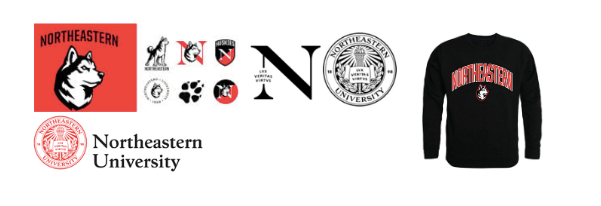
Northeastern University is a huge institution and therefore has many individual logos according to different disciplines and areas of the university. As one of my main responsibilities I have to create different posters, newsletters and flyers for various events in our department. Each piece of multi media must include the Northeastern logo, however, deciding which one to use within the university policy is the hard decision. Northeastern has many logos, however, each collage or sports team affiliated with Northeastern can only use certain logos according to the marketing department. 

Throughout my Brand Management module last year I was introduced to the true importance of branding and how significant branding can be to any organisation. When researching this topic I was able to use information and knowledge that I have learned from the Brand Management module I took last year at GCU. Therefore, I was able to complete not only one of the IP objectives (see appendix 1) but also one of my personal learning objectives (see appendix 2). 

The colour story throughout all of the logos does not change which is easily recognisable for the consumer no matter what the design is. This is a common theme throughout different universities in America, having very recognisable colours. In the higher education market where competition is fierce and where prospective students and their parents may select from among many competitive offerings, creating an identity through branding has become essential (Bunzel, 2007; Joseph et al., 2012). I have noticed that university in America have a larger sense of public pride in the university they or their family member goes to, this can be seen in the university shops with thousands of university branded merchandise and “Husky Mom” and “Husky Dad” branded merchandise. This may be due to the large amount of money that American citizens have to pay in order to gain secondary education and therefore they want to display their institution . 

Appendix 1

IP objective 5: 

Relate, in consultation with experienced practitioners, his/her academic studies to the real life business environment;

Appendix 2 

Learning contract goal 4: 

My goal is to be able to use the academic knowledge such as in my contemporary cultural challenges in international business
module in a practical way through the workplace.

References 

Bunzel, D. L. (2007). Universities sell their brands. Journal of Product & Brand Management16(2), 152–153. doi:10.1108/10610420710740034

Joseph, M., Mullen, E. W., & Spake, D. (2012). University branding: Understanding students’ choice of an educational institution. Journal of Brand Management20(1), 1–12. doi:10.1057/bm.2012.13Open publish panel

Blog 9

This image has an empty alt attribute; its file name is screenshot-2020-01-13-at-12.58.37.png

One of my main responsibilities in the office is to order textbooks and desk copies for the faculty. This responsibility comes with its benefits and challenges as shown below. 

One of the main challenges of this responsibility is textbook order quantity, each semester textbooks will need to be ordered for students however it is extremely difficult to estimate how many copies will be needed. This is something I have found personally challenging as I do not want to waste textbooks or exceed the department budget, however, it is extremely hard to predict how many students will require the textbooks especially when retailers like Amazon are becoming more and more popular when buying school supplies and textbooks. 

However, one of the main benefits is that I get to communicate with new people in the industry everyday wether that be faculty, students or the publishing companies/ representative. Building these personal connections helps me achieve not only one of my personal industrial placement goals but also one of the 8 IP objectives. My personal goal (4) is to develop my interpersonal skills to work as part of a team to contribute towards the larger organisational objective. I have noticed a significant growth in my communication skills through email especially when communicating with several publishers and faculty members at the one time. I have also been able to achieve one of the IP objectives, number 4, to develop technical skills appropriate to the employment; through having consistent contact with employees and outside organisations I have gained a huge insight into American email etiquette.”Using good manners, proper English, and sensitivity to bring a professional tone to electronic correspondence is another way professional businessmen and businesswomen can make a good impression” (Mind Your E-mail Manners, 2003, p. 26). Please see appendix 1 for a useful paper on USA vs UK email etiquette.  Furthermore gaining knowledge in using software programmes such as faculty enlight to place the textbook orders. This software is used by many other universities in the USA including the University of Baltimore and Kent State University therefore, this has been a very useful skill to learn. 

Appendix 1 

https://www.usingenglish.com/articles/differences-between-british-american-emails.html

References

Siddle, P. F. (2003). Mind your email manners . Journal of Accountancy , P26. Open publish panel

Blog 8

This image has an empty alt attribute; its file name is screenshot-2020-01-13-at-12.57.35.png

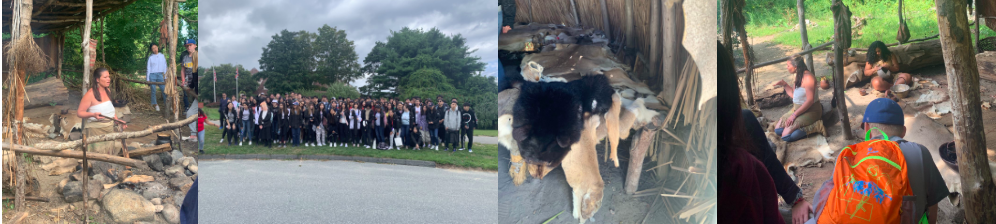
As the students start the academic semester, we organize a field trip to Plymouth Plantation in conjunction with their sociology of Boston. Through feedback from previous cohorts it has been suggested that this trip is extremely useful and a great cultural experience for the international students. When at Plymouth the students are able to interact with actors portraying Native American life.

“Learning consists of grasping an experience and then transforming it into an application or result” (Kolb, 1983). Our student’s task will include walking around the Plymouth Plantation and interacting with the actors and asking questions. As well as this, they have been instructed to find out interesting facts about the way that the pilgrims and Native Americans live. Having a real interactive conversation and visual stimulation will be extremely beneficial to our student’s especially as English is not their first language.

After doing further research on the benefits of field trips in higher education I found that “A field trip with a single focus will provide a potential impact to students’ cognitive skills, knowledge, interests, and future career” (Hutson, Cooper, & Talbert, 2011). Not only does the field trip have the listed benefits above but also it allows students to practice their conversational English and interact with someone rather than reading a traditional text.

When students return from the field trip they will be required to write and present the notes, they took about the different aspects of Plymouth in a reflection session. According to Behrendt and Franklin “Reflection occurs as the student talks about the experience, and abstraction occurs as the student thinks about the experience” (Behrendt & Franklin, 2014). This being said our students would be completing a reflection session and therefore solidifying their knowledge for the future.

 Through going on this field trip and gaining an understanding of how important trips like these are to students and especially our international students. After seeing the positive results of the field trip i was able to gauge an understanding of why our department spend the proportion of their budget on this trip and how they decide which resources should be used when. This expansion of knowledge link’s with learning objective 1 (see appendix 1). 

Appendix 1

1. Experience the environment of a commercial, public sector or social economy organisation and appreciate how needs are identified and how resources are acquired, allocated and used in order to achieve organisational objectives;

References 

Behrendt, M., & Franklin, T. (2014). A Review of Research on School Field Trips. International Journal of Environmental & Science Education, 237.

 Kolb, D. (1983). Experiential learning, experiences as the source of learning and development. Englewood Cliffs, New Jersey: Prentice Hall

Hutson, T., Cooper, S., & Talbert, T. (2011). Describing connections between science content and future careers: Implementing Texas curriculum for rural at-risk high school students using purposefully-designed field trips. Rural Educator,31,37-47.Open publish panel

Design a site like this with WordPress.com
Get started